One of the most common questions I hear from new herding breed owners is when to start training and what to prioritize at each stage. The answer is not as simple as a checklist because every puppy develops at their own pace. But there is a general roadmap that accounts for cognitive development, physical capabilities, and emotional readiness. Understanding the developmental milestones helps you set realistic expectations.
This timeline is designed specifically for herding breeds, which tend to mature intellectually faster than many other breeds but can be emotionally slower to develop impulse control. Understanding this dichotomy is key to effective training.
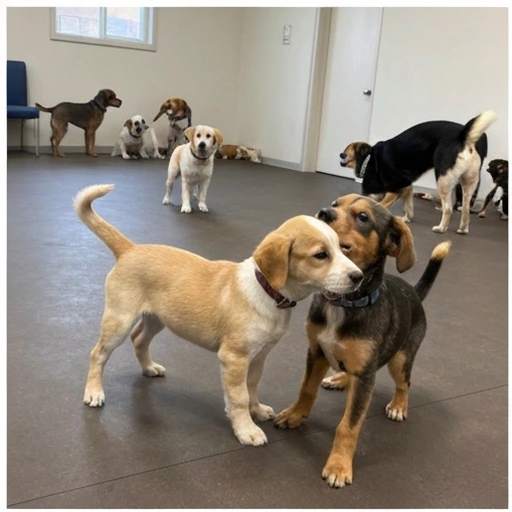
Weeks 8-10: Building the Foundation
Your puppy arrives knowing nothing about human expectations. These first weeks are not about training commands. They are about building a relationship and establishing that you are the source of everything good.
Priority Skills
- Name recognition: Say your puppy's name and reward any eye contact or attention. Do this dozens of times daily.
- Crate conditioning: Make the crate a place of good things, never punishment. Feed meals inside. Give special chews only in the crate.
- Potty training basics: Establish a consistent schedule. Reward immediately after elimination in the right spot.
- Handling tolerance: Touch ears, paws, mouth, and body while giving treats. This is not optional; it prevents lifelong struggles with grooming and veterinary care.
Training Session Parameters
At this age, formal training sessions should last no more than two to three minutes. End every session on a success. If your puppy seems confused or distracted, you have gone too long. Scatter multiple micro-sessions throughout the day rather than one longer session.
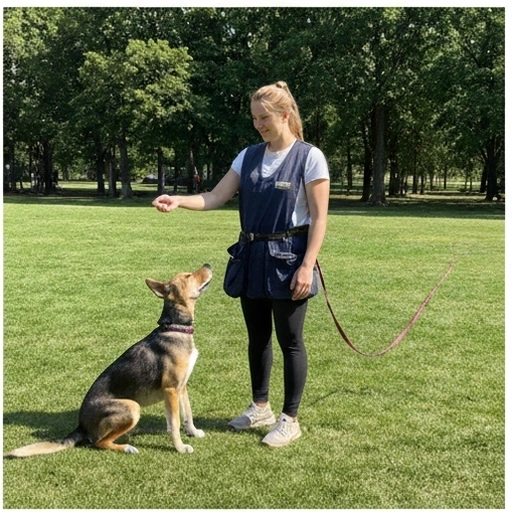
Weeks 10-12: First Commands
Now you can begin introducing basic commands, but keep expectations modest. Your puppy is still a baby with a baby brain.
Priority Skills
- Sit: Use luring initially, capturing when your puppy offers it naturally, or both. Herding breeds often pick this up within a few repetitions.
- Focus or watch me: Reward your puppy for making eye contact. This becomes the foundation for attention in distracting environments.
- Hand targeting: Teach your puppy to touch their nose to your palm. This is surprisingly useful for positioning, recall, and redirecting attention.
- Recall foundation: Make coming to you the best thing that ever happens. Never call your puppy to punish or end fun.
The Recall Rule
For the first six months, every single recall should result in something wonderful. Food, play, praise, freedom to return to what they were doing. Never call your puppy to put them in the crate when they do not want to go, to leave the park, or for anything they perceive as negative. Go get them instead. You are building a recall that could save their life someday.
Session Length
Sessions can extend to three to five minutes now, but still aim for multiple short sessions rather than one long one. Three five-minute sessions accomplish more than one fifteen-minute session.
Weeks 12-16: Building Reliability
Your puppy now knows the basic mechanics of several commands. The work shifts to building reliability in the face of distractions and introducing new concepts.
Priority Skills
- Down: Once sit is reliable, introduce down. Some herding breeds resist this as it feels vulnerable. Go slowly and reward generously.
- Stay introduction: Start with one-second stays at one step away. Build duration before distance, and distance before distraction.
- Leave it: Essential for safety. Start with low-value items and gradually work toward higher temptations.
- Loose leash walking foundations: Do not expect perfect heeling, but reward position at your side and penalize pulling by stopping or reversing.
Proofing Begins
A command your puppy performs in your quiet living room is not the same as that command in a pet store. Begin very gradually adding distractions. Start in low-distraction environments and slowly increase difficulty. If your puppy fails, you increased difficulty too fast.
Month 4-5: Impulse Control Focus
Your puppy's brain is developing rapidly, but impulse control lags behind. This creates the classic herding breed behavior: they know what they should do but cannot make themselves do it when excited. Focus heavily on impulse control exercises during this period.
Priority Skills
- Wait at doors: Your puppy should not blast through doorways. This is about safety as much as manners.
- Waiting for food: The bowl does not go down until your puppy is calm. This can take weeks of practice.
- Taking treats gently: Teeth should never touch your fingers. Be consistent about this.
- Settle on a mat: Teach your puppy to relax on a designated spot. This becomes invaluable for restaurants, offices, and home life.
Managing Frustration
Some puppies become frustrated when asked to exercise impulse control. They may bark, paw at you, or offer behaviors rapidly hoping something will work. Wait for calm. Do not reward frustrated behavior even if the behavior itself is correct. The emotional state matters as much as the action.
Month 5-6: Proofing and Generalization
Your puppy has a vocabulary of commands and some impulse control. Now comes the work of making these skills reliable in different contexts.
Priority Focus
- Practice commands in new locations: The backyard, a quiet park, the pet store parking lot, a friend's house. Dogs do not generalize well; you must teach the command in each new context.
- Increase distractions systematically: Other people, other dogs at a distance, moving objects, interesting smells.
- Recall with distractions: This is critical. Practice recall when something interesting is happening, but set up situations where you can ensure success.
- Duration work: Extend stays to multiple minutes. Your dog should be able to hold a down-stay while you move around the room.
The Regression Warning
Around five to six months, many puppies seem to forget everything they have learned. This is normal. The adolescent brain is reorganizing, and previously reliable skills may become unreliable. This is not the time to add new commands. Go back to basics and reinforce what your puppy already knows. The reliability will return.
Month 6-8: Adolescent Training Challenges
Welcome to adolescence, where your previously cooperative puppy becomes a selective listener. Hormones are surging, the world is endlessly interesting, and you are suddenly much less important than you used to be. Our adolescent survival guide covers this challenging phase in detail.
Survival Strategies
- Increase reward value: Whatever you were using as treats, upgrade. This is not the time to be stingy.
- Shorten sessions: If your adolescent can maintain focus for three minutes, work with that. Pushing longer results in practiced failure.
- Manage more, train less: Use leashes, gates, and prevention. Every time your adolescent practices unwanted behavior, they get better at it.
- Maintain consistency: Rules that applied at five months still apply at seven months, even though your dog acts like they have never heard them before.
What to Prioritize
During adolescence, focus on maintaining rather than advancing. Your goals are to preserve the skills you have built and to prevent your dog from learning bad habits that will take months to undo later.
Recall is particularly vulnerable during this period. Many adolescent dogs develop recall problems because owners push too hard, too fast, in environments that are too distracting. Go back to basics. Use a long line for safety. Make coming to you consistently wonderful.
Month 8-10: Renewed Progress
The worst of adolescence is behind you. Your dog's brain is settling into its adult patterns, and you can begin making forward progress again.
Priority Skills
- Off-leash reliability: If you want an off-leash dog, this is when focused work begins. Use a long line and practice in gradually more challenging environments.
- Advanced impulse control: Stays with significant duration and distraction. Leave it with high-value items. Waiting while other dogs play.
- Heel position: Now you can work toward formal heeling if desired. Loose leash walking should be well established before attempting this.
- Sport foundations: If you plan to pursue herding, agility, disc dog, or other activities, their specific foundation skills can begin in earnest now.
Month 10-12: Polishing and Preparing
Your puppy is becoming a young adult. The foundation work of the first year should be largely complete, and you are now refining skills and beginning to see the reliable dog your puppy is becoming.
Priority Focus
- Consistency across contexts: Your dog should respond to commands regardless of location, distraction level, or your body position.
- Reducing reward frequency: Begin variable reinforcement. Your dog does not need a treat for every sit anymore, but keep rewards unpredictable and exciting.
- Building duration and distance: Stays should be reliable at thirty feet for several minutes. Recalls should be reliable at fifty feet or more.
- Advanced skills introduction: If you have done the foundation work properly, your dog is ready to learn more complex behaviors.
What Success Looks Like at One Year
At twelve months, a well-trained herding breed should be able to demonstrate the following skills reliably in moderately distracting environments:
- Sit, down, and stand on verbal cue with no hand signals needed
- Stay in any position for two to three minutes at fifteen feet with mild distractions
- Come when called from at least thirty feet in familiar environments
- Walk on a loose leash for ten to fifteen minutes without constant management
- Leave it with food on the floor
- Wait at doors and for food without being asked repeatedly
- Settle on a mat or in a designated spot for extended periods
Realistic Expectations
If your one-year-old can do most of these things most of the time, you have done excellent work. Perfection is not the goal. A dog who responds reliably eighty percent of the time is a well-trained dog. The remaining twenty percent comes with maturity and continued practice. Some herding breeds do not reach full training potential until two or three years old.
Adjusting for Your Individual Dog
This timeline assumes a typical herding breed puppy with no unusual challenges. Your individual dog may progress faster or slower based on their genetics, your training skill, and their unique temperament.
Some herding breeds, particularly those with more sensitive temperaments, may need a gentler pace. Others, especially working-line dogs, may be ready for more challenge earlier. Watch your dog, not the calendar.
If your dog is consistently struggling with a skill, the problem is usually one of three things: the skill was advanced too quickly, the rewards are not motivating enough, or there is an underlying physical or emotional issue interfering with learning. Address the root cause rather than pushing harder.
Understanding your dog's genetic heritage helps set realistic expectations. Visit The Herding Gene for breed-specific information that can inform your training approach.